
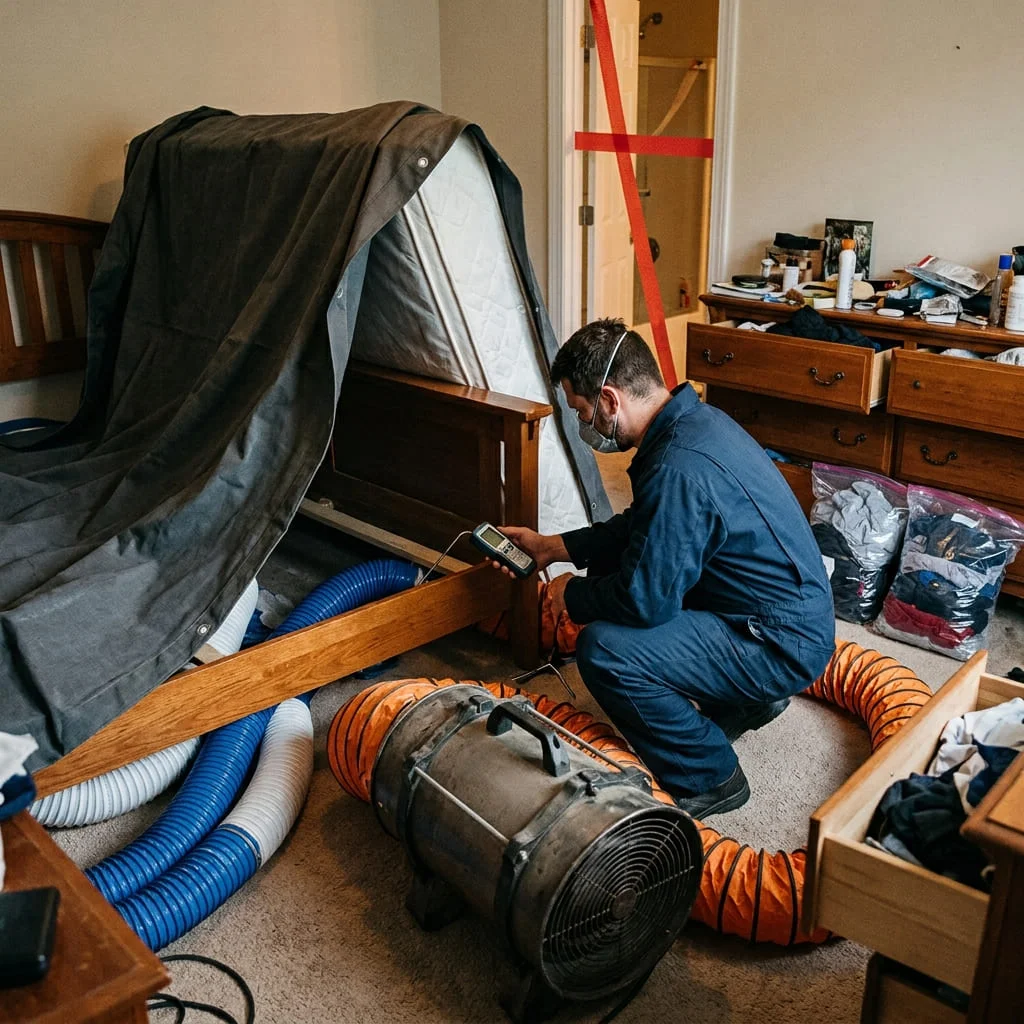
Bed bug heat treatment raises an entire structure to between 120°F and 135°F and holds it there, and at 130°F every life stage including eggs dies. That single fact is the whole case for thermal remediation. Conventional pesticides do not reliably kill eggs, so chemical programmes are built around returning after those eggs hatch — heat removes that cycle in one visit. Expect $400 to $900 per room in Washington.
The thermal death point, and why eggs set it
The thermal death point for bed bugs is not one number, and eggs are the reason. Adults are relatively fragile to heat, but eggs tolerate considerably more, so a treatment calibrated to kill adults leaves the next generation intact. That is the failure mode behind most disappointing DIY heat attempts.
| Sustained temperature | What happens |
|---|---|
| 113°F / 45°C | Adults begin to die after roughly 90 minutes of exposure. |
| 118°F / 48°C | Adults die within about 20 minutes. Eggs still survive at this level. |
| 122°F / 50°C | Eggs begin to fail. This is the floor for a treatment that actually works. |
| 130°F / 54°C | Every life stage including eggs dies on sustained exposure. The target. |
| 135°F / 57°C | Practical upper limit. Above this, damage to contents becomes the risk. |
The reading that counts is the one taken inside a mattress core, behind a headboard, or in a wall void — not the air temperature in the middle of the room. Competent operators place remote probes at the coldest points they can find and hold the target until those probes confirm it. If a company cannot tell you where they put their sensors, that is the question to keep asking.
Why heat costs more and still works out cheaper
Heat costs more per room and frequently costs less per infestation. The per-visit comparison that makes chemical look cheap ignores that chemical is almost never one visit.
- One visit instead of three. A chemical programme is typically two to three treatments over four to six weeks, priced per visit. Add them up before comparing.
- No day-six reinfestation. Eggs hatching six to ten days after a chemical application are the single most common reason people believe treatment failed. Heat closes that window on day one.
- One day off work instead of four. Each chemical visit means preparation, vacating, and returning. For hourly workers that cost is real and rarely counted.
- Resistance is not a factor. Pyrethroid resistance is widespread in bed bug populations. No population has evolved resistance to protein denaturation.
What heat can damage
Heat can damage a specific and fairly short list of items, and any company claiming otherwise is selling rather than explaining. The structure itself is not at risk — buildings tolerate 130°F without difficulty — but some contents genuinely do not.
- Aerosols and pressurised containers. Deodorant, spray paint, propane canisters, fire extinguishers. These leave the building.
- Wax and candles. They will melt. So will lip balm, crayons and some cosmetics.
- Vinyl records and photographic film. Warping is permanent and starts well below 130°F.
- Musical instruments and antique furniture. Hide glue and older adhesives soften. Guitars, violins and veneered pieces should come out.
- Some electronics. Sealed lithium batteries, and anything with a liquid crystal display, are worth removing even though many survive.
- Medication, live plants and fresh food. Anything specifying room-temperature storage leaves with you.
How to prepare for treatment day
Preparing for treatment day is mostly about airflow and removal, not deep cleaning. Heat has to reach harborage, and anything that blocks circulation creates a cold spot where insects survive.
-
First
Strip and bag laundry
Run bedding and clothing through a hot wash and a high-heat dryer cycle, then seal it in bags until the treatment is done. The dryer does the work — 30 minutes on high kills every stage.
-
Second
Remove the damage list
Aerosols, candles, vinyl, medication, plants, pets and instruments come out, following the list your exterminator provides rather than a generic one.
-
Third
Open everything up
Pull furniture off walls, open drawers and closet doors, and unfold folded items. Heat needs to circulate into every void, and a closed drawer is a cold pocket.
-
Finally
Cut clutter, do not add it
Reduce piles so air can move, but resist the urge to box things up and move them to another room. Moving infested items around the house is how a one-room job becomes a whole-home job.
That is the short version. The full preparation checklist is written to be printed and worked through room by room, and it covers the six mistakes that get prep rejected on the day. The hour-by-hour treatment day guide covers what happens once the technician arrives.
When heat is not the right call
Heat is not the right call in several common Washington situations, and a good exterminator will say so. In occupied multi-unit buildings, closing down a whole floor for a day is often impractical, and treating one unit thermally while neighbouring units go untreated invites reseeding through shared walls. Older buildings with knob-and-tube wiring or limited electrical capacity may not support the equipment load without generators.
Senior living and assisted care raise a different problem: residents who cannot vacate for eight hours, oxygen equipment, and medication storage requirements. Those situations usually call for a chemical or combined approach, handled with more care than a standard job. Our commercial page covers how those settings differ.
Heat treatment cost in Washington
Heat treatment cost in Washington runs $400 to $900 per room, or $2.00 to $6.50 per square foot with a minimum callout around $1,000. Whole-home thermal work on a typical single-family property generally lands in the $1,000 to $2,500 band, with severe multi-room infestations reaching $4,000 to $6,000.
Square footage, ceiling height, insulation quality and how much preparation the company handles all move the number. The full cost breakdown sets heat against chemical across every home type, and the main removal page covers how the two methods fit into a complete treatment plan.