
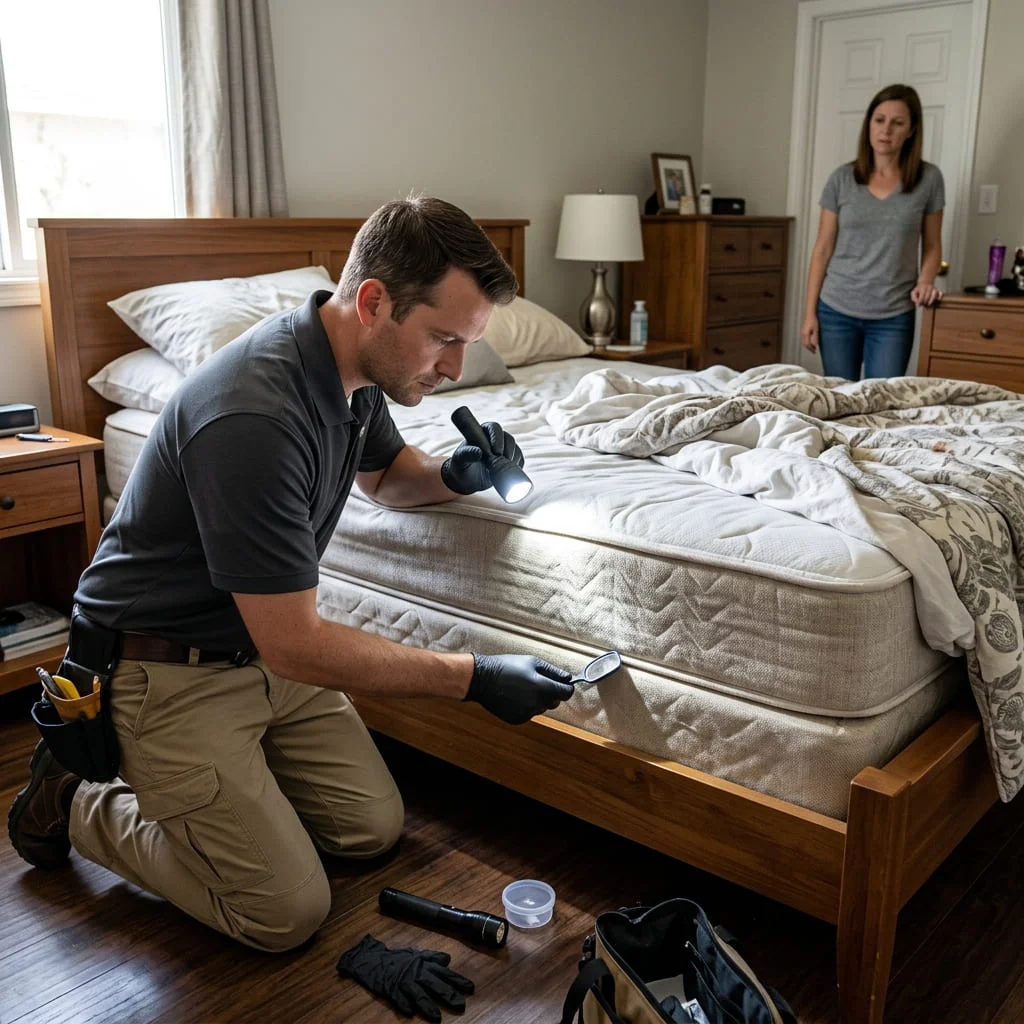
Same-day bed bug treatment in Washington carries a surcharge of $200 to $500 and is realistically available on weekdays across the Puget Sound corridor. Outside that corridor, same-day generally means a same-day inspection with treatment booked for the next slot. What you do in the hours before anyone arrives matters more than most people realise — two common reactions make the infestation permanently worse.
What to do tonight
Tonight, do three things and nothing else. Everything on this list either limits spread or preserves evidence, and none of it costs money.
- Sleep in your own bed. This feels wrong and it is correct. Bed bugs navigate toward carbon dioxide, so if you relocate to the sofa, they relocate too — and now you have two infested rooms instead of one.
- Run laundry hot, then bag it. A hot wash followed by 30 minutes in a high-heat dryer kills every life stage. Seal the clean laundry in bags until after treatment so it cannot be reinfested.
- Photograph what you found, with a date. Staining, shed skins, live insects, and the location of each. If you rent, or if this becomes a dispute, those photographs are the most useful thing you will have.
What same-day actually means
Same-day means different things depending on where in Washington you are, and it is worth pinning down before you agree to a surcharge.
Across the King, Pierce and Snohomish county areas, enough companies operate that a morning call can produce an afternoon treatment on a weekday. In the Spokane, Clark and Thurston county areas, same-day inspection is usually achievable with treatment following within a day or two. Across the Olympic Peninsula, the coast, and eastern county areas, genuine same-day treatment is uncommon — travel distances are real and fewer companies cover those ZIPs.
Heat treatment is harder to arrange at short notice than chemical anywhere in the state, because it needs specific equipment and a technician committed on site for six to eight hours. If a company offers same-day heat, confirm it is thermal remediation rather than a portable unit for a single room.
The surcharge, and when to pay it
The surcharge runs $200 to $500 and is charged on top of the treatment, not instead of it. It reflects a genuine cost — a technician pulled off booked work — rather than a premium on your panic.
Pay it when the timing is genuinely forced. A fixed move-out or move-in date, a landlord deadline, a family member reacting badly, or a commercial property where every night of delay carries reputational cost all justify it. Skip it when the honest situation is that you found them tonight and want it gone tonight, because one more night changes very little about an infestation that has been developing for weeks. The cost page sets the surcharge against the rest of the pricing.
Before the technician arrives
Before the technician arrives, clear access and leave the evidence alone. Pull furniture a foot off the walls if you can do it without carrying anything out of the room, and clear the floor around beds and sofas so the technician can work baseboards and frames.
Leave the mattress in place, leave the staining where it is, and do not vacuum the seams — the inspector needs to see what you saw. Write down when you first noticed bites or staining, whether you have travelled recently, and whether any second-hand furniture has come into the home in the last few months. Those three answers shape the treatment plan more than anything else you can tell them.