Washington Bed Bug Solutions
Services & areas

Peaks through the wet spring

Ant Control in Washington

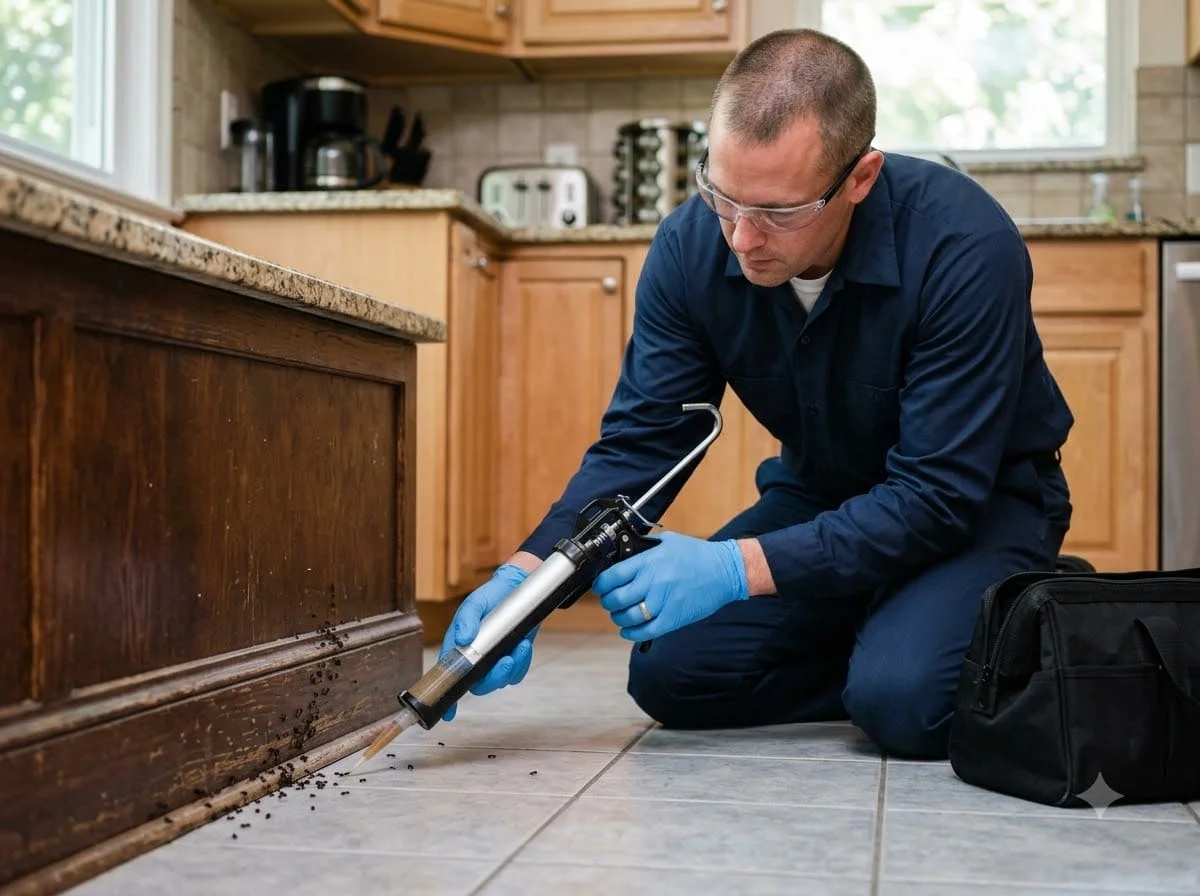
The trail is not the colony. Spraying what you can see kills the replaceable part and can split the nest into three — which is why every competent job here starts with bait.

Call us at (206) 555-0142

Speak to someone now — we will get an exterminator out to you.

  • Species identified before treatment
  • Bait, not contact spray
  • Ask for the WSDA licence number

Licence you can check

Applying pesticides for hire in Washington requires a WSDA applicator licence. Ask for the number on the call — it is public and you can verify it yourself.

Statewide reach

Coverage from Whatcom to Clark and east to Spokane, routed by ZIP rather than by city name.

No cost to you

Companies pay us a referral fee. You are never billed by us and never obliged to book.

The single most useful thing to know about ants is that the trail across your worktop is not the colony. It is the delivery service.

Foragers are a small and entirely replaceable fraction of the population. The queen and the brood are somewhere you cannot see, and every treatment decision follows from that one fact — including why the spray under your sink makes the situation worse rather than better.

The three nuisance ants you actually have

Washington has plenty of ant species. Three of them account for nearly every non-structural callout, and telling them apart takes about ten seconds.

Species Where and when How to know
Odorous house ant Dominant indoor ant west of the Cascades. Kitchens, bathrooms, wall voids near plumbing. Peaks through the wet spring. About an eighth of an inch, dark brown to black, fast-moving in defined trails. Crush one: a sweet rancid smell, usually described as rotten coconut.
Pavement ant Driveway seams, patio slabs, foundation edges, and indoors on slab-on-grade construction. Common statewide, more so east. Similar size, brown to black, with fine parallel grooves on the head and thorax. Small mounds of excavated soil pushed up through cracks in concrete.
Thatching ant Outdoors, in large thatch mounds of conifer needles and twigs. Rural and wooded properties on both sides of the state. Large, red and black, and they bite and spray formic acid when disturbed. A yard problem rather than a house problem, and a beneficial predator you may not want removed.

Why the spray under the sink makes it worse

Retail contact sprays do three things, and only the first is the one you wanted.

They kill the foragers on the trail, which the colony replaces within days. They leave a repellent residue, so the colony reroutes around the treated area and reappears somewhere else in the house. And with odorous house ants specifically, they can trigger budding — a stressed colony splitting into multiple satellite nests, each with its own egg-laying queen.

The visible outcome is the one people describe on the phone constantly: one trail in the kitchen became three trails in three rooms two weeks after treating it themselves.

How a professional ant job actually runs

A competent Washington ant treatment has four parts, and the first is not chemical.

Identification. Species determines bait choice, because ants shift between sugar-feeding and protein-feeding across the season and a bait matrix they are not currently interested in gets ignored. A technician who does not name the species is guessing.

Tracing the trail to the entry point. The trail leads somewhere, and following it to the pipe penetration, window frame gap or siding joint tells you where the exterior treatment and the sealing work need to go.

Baiting. Slow-acting bait placed on the trail, not sprayed across it. Foragers carry it into the nest and share it by trophallaxis, which is how the active ingredient reaches the brood and the queen. Expect more ants for two or three days. That is the bait working.

Exterior perimeter and exclusion. A non-repellent exterior treatment plus sealing the entry points, so the next colony along does not simply take the vacancy. On a property with an annual problem, this is the part that a quarterly plan is genuinely buying.

What to do — and stop doing — while bait is down

Stop spraying anything, including household cleaners, along the trail. Repellents interrupt the delivery route and undo the treatment. Wipe up spills away from the trail, keep sugar, honey and pet food sealed or elevated, and empty recycling that has held sweet residue — you are removing competition for the bait rather than starving the colony.

Then seal what you can reach: gaps around pipe and cable penetrations, failed caulk at window and door frames, and the joint where siding meets a slab or deck. Ants come in through openings measured in fractions of a millimetre, so this is never complete, but it changes the pressure.

What ant control costs in Washington

A one-off nuisance ant callout runs $150 to $350 in 2026 and usually includes one follow-up visit. Quarterly plans run $100 to $175 per visit and earn their cost on a property with an annual spring problem, because most of the value is in exterior perimeter work done before the ants get in.

Carpenter and moisture ant work is quoted higher, $250 to $600, because the job is locating a nest inside a structure rather than intercepting a trail. The statewide pest control page carries the full cost table across all eight services.

Our promise

No surprises, and nothing charged to you

Bed bug work is priced on what a technician finds in the room, so any figure quoted before an inspection is a guess. What we can promise is the part we control: the call is free, the referral is free, you are under no obligation to book, and if nobody covers your ZIP we say so on the call instead of taking your details anyway.

Call us at (206) 555-0142

Free call, free referral, no obligation.

Frequently asked questions

What are the tiny black ants in my Washington kitchen?

Most often odorous house ants, Tapinoma sessile, which are the dominant indoor nuisance ant west of the Cascades. They are small, dark brown to black, around an eighth of an inch, and they run in visible trails along counter edges, skirting boards and pipe runs. The reliable identification is the smell: crush one and it gives off a distinctly sweet, slightly rancid odour usually described as rotten coconut or blue cheese. Nothing else in a Washington kitchen does that.

Why does spraying ants make the trail worse?

Because a trail is not the colony. Foragers are a small fraction of the population and are entirely replaceable — the queen keeps producing them. Contact sprays kill the ants you can see, leave a repellent residue that pushes the rest of the colony to route around it, and in the case of odorous house ants can trigger budding, where a stressed colony splits into multiple new nests. The visible result is that the single trail you had becomes three trails in different rooms a fortnight later.

How does ant baiting actually work?

A bait is a slow-acting active ingredient in a food matrix the ants will carry rather than die on. Foragers take it back to the nest and distribute it by trophallaxis — mouth-to-mouth food sharing — which is how it reaches the brood and the queen. That is why baits are deliberately slow, and why seeing more ants for the first two or three days is a sign it is working rather than failing. It also means you must stop cleaning the trail and stop spraying while the bait is down, because both interrupt the delivery.

Do ants in Washington damage buildings?

Odorous house ants, pavement ants and thatching ants do not. They are a contamination and nuisance problem, not a structural one. Carpenter ants and moisture ants are the two that matter structurally, and they are a genuinely different job with a different diagnosis behind it — carpenter ants excavate galleries in damp-softened wood and moisture ants colonise wood that is already rotting. If you are finding coarse sawdust rather than only ants, that is the page to read instead.

When is ant season in Washington?

Indoor ant activity climbs from April as ground temperatures rise and peaks through the wet spring and early summer. West of the Cascades, sustained rain reliably pushes foraging indoors, which is why the worst weeks are often the wettest ones rather than the warmest. Eastern Washington runs a drier, hotter pattern where ants come indoors seeking water rather than shelter, so the peak sits later in the summer. Activity falls away with the first sustained cold, though colonies inside a heated wall void can stay active all winter.

What does ant treatment cost in Washington?

A one-off callout for a nuisance ant problem typically runs $150 to $350 in 2026, usually including one follow-up. Quarterly plans run $100 to $175 a visit and are genuinely worth it on properties that have the problem every spring, because most of the work is exterior perimeter treatment done before the ants come in. Carpenter and moisture ant work is priced higher, $250 to $600, because locating the nest is the job and it can take repeat visits.

Can I just keep the kitchen clean instead?

Sanitation helps and it is worth doing, but on its own it rarely clears an established colony. Ants are foraging across a radius of many metres and will find the crumb you missed, the pet bowl, the recycling, and the sugar in a poorly sealed packet. What sanitation does well is remove the competing food sources that make bait less attractive, which is why a technician will ask you to tighten it up while the bait is down. Sealing entry points along window frames, pipe penetrations and door thresholds does more than cleaning alone.

Sources

Figures on this page are ranges drawn from the sources above and from published 2026 regional pricing. Treatment is quoted on what a technician finds on site, so treat every number here as a planning range rather than a price.

Get the species identified first

Bait choice follows species, and species follows a look at the actual ant. Call and we will get a local pest control company out to you.

No cost, no obligation. Lines are open now.