
Nearly every flea problem in Washington is one species — the cat flea, Ctenocephalides felis — and it turns up on cats and dogs alike.
The single most useful thing to understand about it is where the population actually lives. The adults you can find on an animal are roughly five per cent of the total. The other ninety-five per cent are eggs, larvae and pupae distributed through carpet, floorboard gaps, rugs and bedding.
Everything that seems confusing about flea treatment — why it takes two visits, why the house appears to reinfest, why treating the pet alone never works — follows from that one fact.
The life cycle, and why it explains everything
Eggs are laid on the animal and are not sticky, so they fall off wherever it goes. The heaviest concentration is always where the pet sleeps rather than where it walks.
Larvae hatch in the floor, avoid light, and burrow down into carpet pile and floorboard cracks feeding on organic debris. Then they spin a cocoon — and this is where the trouble starts.
| Stage | Where it is | What treatment does to it |
|---|---|---|
| Adult, roughly 5% | On the animal, feeding and laying. | Killed readily by both the veterinary product and the property treatment. This is the part everyone sees. |
| Egg | Falls off the animal into carpet, bedding, floor cracks and upholstery within hours of being laid. | Largely controlled by the insect growth regulator in a professional treatment. |
| Larva | Down in the carpet pile and floorboard gaps, away from light. | Reached by the residual, provided the treatment gets into the base of the pile rather than sitting on top of it. |
| Pupa, in cocoon | Same locations, sealed inside a sticky silk cocoon that picks up debris and camouflages itself. | Effectively protected. This stage survives treatment by design and is the reason a second visit exists. |
The Washington source nobody looks for
A recurring call goes like this: there is no pet in the house, or the pet never goes outside, and there are fleas anyway.
The usual answer in this state is the crawlspace. Washington housing stock is full of vented crawlspaces, and raccoons, opossums, feral cats and rodents nest in them readily. All of those carry cat fleas. When the host animal moves on or dies, the flea population left behind moves up through the subfloor looking for a replacement host — which is you.
The same mechanism explains the other classic case: a house that has been empty for weeks producing a sudden mass emergence the day new occupants move in. The pupae had been dormant, waiting for exactly the vibration and warmth that arrival provides.
If there is no pet in the equation, the useful instruction to give a technician is to look under the house before treating the carpet. And if wildlife is the source, the durable fix is exclusion — the same crawlspace sealing work covered on the rodent control page.
How the job should run
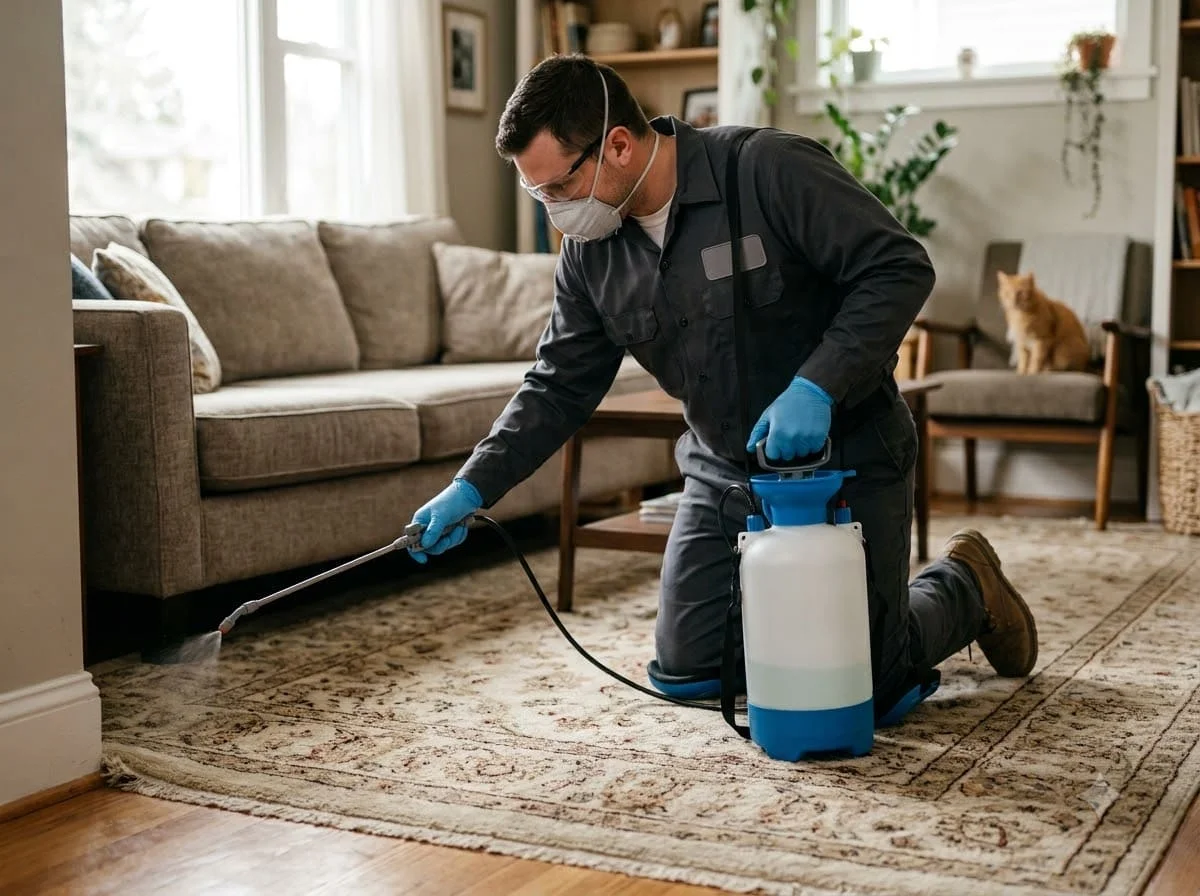
Pet and property on the same day. A vet-prescribed adulticide with an insect growth regulator does the animal side. Doing one without the other is the most common reason a flea job runs for months.
Preparation before the technician arrives. Vacuum thoroughly, including under furniture and along skirting boards, and dispose of the vacuum contents outside. Wash all pet bedding hot and dry it on high heat. Clear floor space so treatment can actually reach it.
A residual plus a growth regulator on the property. The residual handles adults and larvae; the growth regulator stops eggs and larvae reaching adulthood, which is what prevents the population rebuilding while the pupal window plays out.
A second visit, timed. Usually ten to twenty-one days later, to catch the emerged pupal generation. If a quote does not include it, ask what happens when the cocoons hatch.
Two things that undo the work
Do not shampoo or steam-clean carpets after treatment. It removes the residual from precisely the layer where the larvae are, and the job has to be repeated.
Do not use a fogger. Total-release foggers deposit on open surfaces and reach almost nothing at the base of the carpet pile where the immature stages are, they carry a real fire risk near a pilot light, and against resistant populations they scatter more than they kill.
What flea treatment costs in Washington
Treatment runs $150 to $400 per visit in 2026, and it is almost always two visits. Cost tracks square footage — particularly carpet and soft flooring area — and whether a crawlspace needs treating too.
Veterinary products for the animal are a separate cost and are the more important half of the two. Where wildlife under the building is the source, exclusion is a third cost and is the one that stops it happening again. The statewide pest control page carries the full cost table.
When it turns out not to be fleas
Flea bites on people cluster on the lower legs and ankles, because the insect jumps from floor level. Bites that appear overnight on the arms, shoulders, neck and back have a different cause, and the most common one is bed bugs.
The bites comparison guide covers how to separate the usual causes, and inspection covers what to look for on the mattress and frame if the pattern points that way.